Commercial LED emergency lights
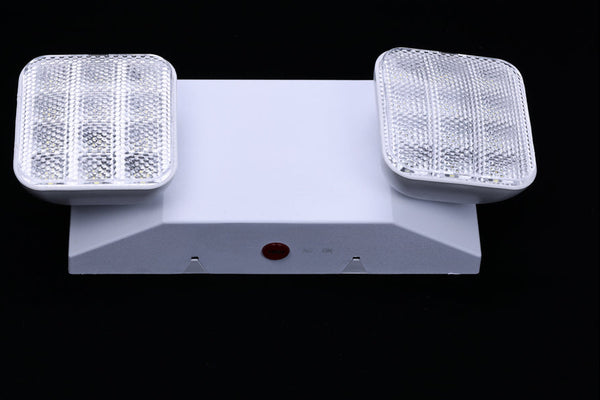
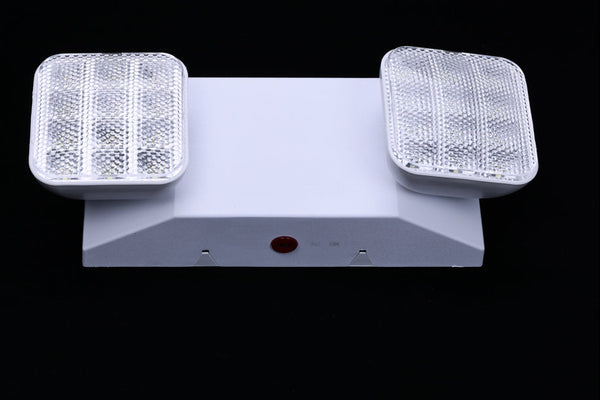
Twin head LED emergency lights that keep the path of egress lit for at least 90 minutes during a power failure, with the easiest testing in the industry.
What an emergency light does
When normal power fails, emergency lights switch to battery and light the path of egress: corridors, stairs, aisles and the area outside exit doors. NFPA 101 sets the performance bar: illumination for at least 90 minutes, starting at an average of about 1 foot-candle along the egress path and never dropping below a minimum of 0.1 foot-candle at any point. Twin head units like ours aim two adjustable LED lamps where people need to walk.
Our emergency lights
| Model | Testing | Price |
|---|---|---|
| One Touch Twin Head LED Emergency Light | One press monthly, two press annual | $42.00 |
| Self-Testing One Touch Twin Head LED Emergency Light | Automatic monthly and annual | $69.00 |
Where emergency lights go
Codes require emergency illumination along the full means of egress, including exit access corridors, stairways, ramps, aisles in assembly spaces and exit discharge. Lay out units so the light pattern overlaps and there are no dark spots at turns, stairs and doors. Your electrical engineer or contractor will confirm spacing against the light output and the local code; see emergency lighting requirements for the rules.
Battery health is the whole game
An emergency light is only as good as its battery. Batteries lose capacity with age and heat, and a unit that passes a 30-second test can still fail at minute 40 of a real outage. That is exactly why the annual 90-minute test exists, and why most failures are found late. Self-testing units run the 90-minute test every year automatically and flag a weak battery right away. Read more in emergency light batteries.
Frequently asked questions
How long must an emergency light stay on?
NFPA 101 requires emergency illumination for at least 90 minutes (1.5 hours) after normal power is lost.
What is a twin head emergency light?
A battery-backed fixture with two adjustable lamp heads that you aim along the egress path. It is the most common emergency light for corridors, stairwells and open areas.